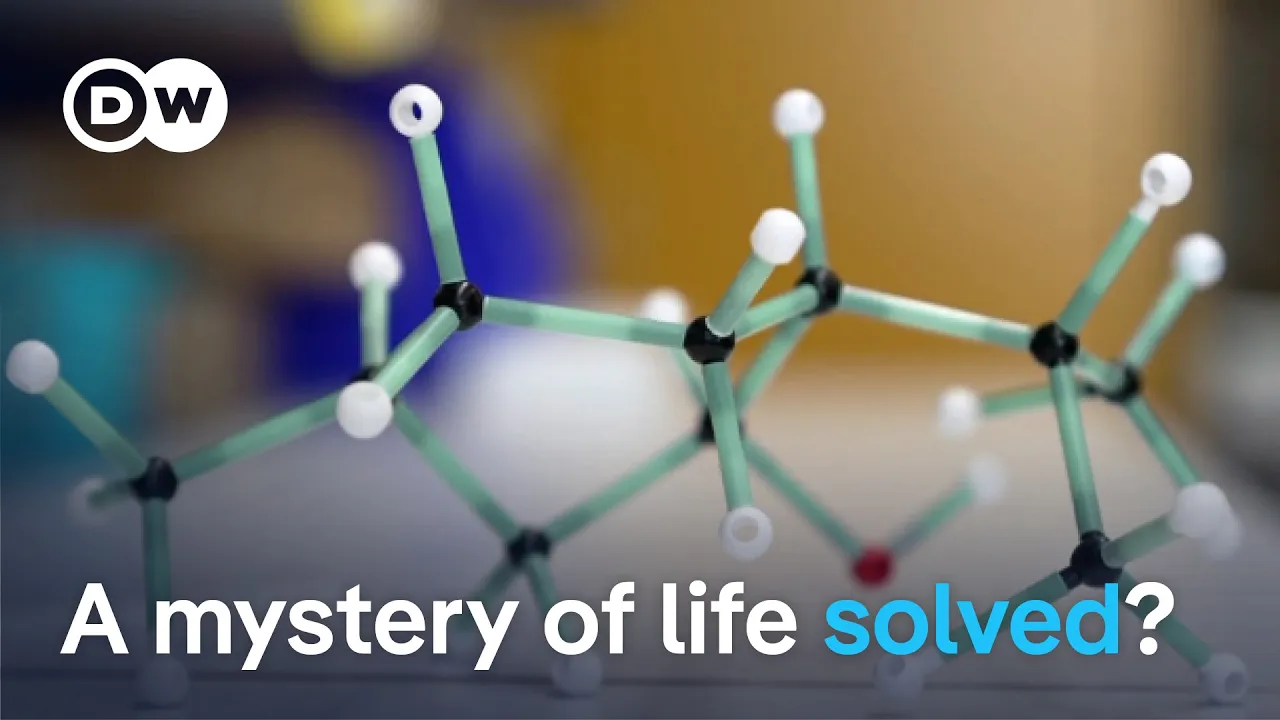

Place your palms face down on a desk, and you immediately confront life’s most fundamental geometric preference: non-superimposable mirror symmetry. Despite having identical chemical formulas, nature almost universally discards one half of the chiral coin. This year’s Nobel Prize in Chemistry honors two researchers whose insights into stereochemistry finally demystified this biological bias, fundamentally reshaping modern pharmacology in the process.
In an ordinary abiotic environment, spontaneous organic synthesis yields an equimolar, racemic mixture containing both left- and right-handed shapes. Yet living tissue is relentlessly discerning. The macromolecular substrates inside our bodies operate with strict spatial fidelity, treating stereoisomers as entirely different functional keys. If you feed the wrong geometry to a cellular binding site, the outcome can veer from benign inactivity to severe physiological trauma. Consider how doctors administer ketamine. The S-enantiomer exerts robust anesthetic power at low doses, while the mirror isomer produces unwanted psychotomimetic episodes and cognitive confusion. Even routine pharmaceuticals like ibuprofen showcase this subtle dance, relying on hepatic isomerization to salvage therapeutic utility from an otherwise uncooperative twin. By inventing practical synthetic pathways that amplify one orientation while suppressing the other, the laureates dismantled a long-standing synthetic hurdle. Their breakthrough spares patients the unnecessary stress of metabolizing extraneous chemical ballast, driving remarkable efficacy across critical drug formulations.
Understanding the handedness of life has bridged the gap between primordial evolution and the medicines we rely on every day. It stands as a sharp reminder that in biology, spatial orientation is never cosmetic—it determines whether a molecule heals or harms.