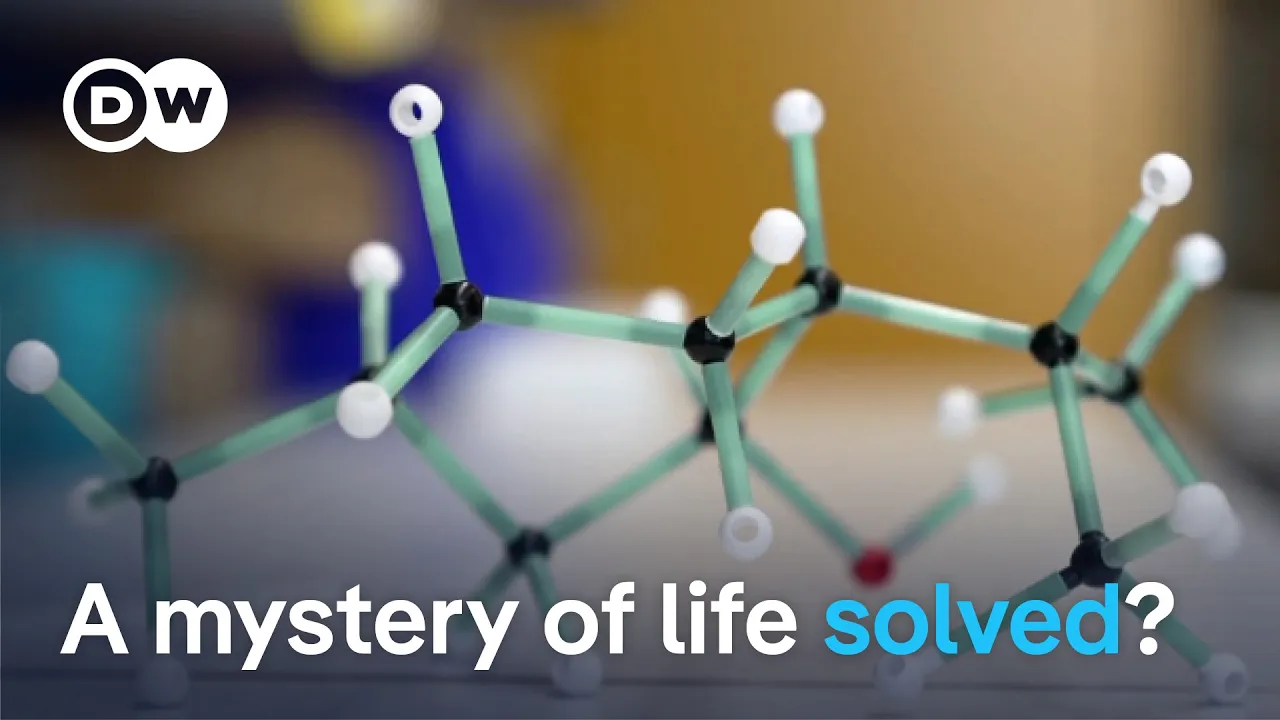

Hold your hands up in front of you with your palms facing forward. While they appear identical, you cannot put your left hand into a right-hand glove because they are mirror images of each other. In biology and chemistry, this physical asymmetry is known as chirality. A prestigious Nobel Prize honors two chemists who figured out how nature selects one specific side, unlocking massive improvements for the treatments you take when you are ill.
For over a century, researchers could not explain why nature chooses only one orientation for the chemical scaffolding of life. When scientists synthesize compounds in a laboratory, the reaction naturally yields an equal split of both left- and right-handed forms. Inside your body, however, cellular receptors work like a lock and key. A drug molecule must have the exact physical counterpart to bind properly and start healing you. Consider common analgesic tablets like ibuprofen that sit in your medicine cabinet. One spatial form targets swelling right away, whereas its opposite twin simply drifts through your bloodstream until internal enzymes reconfigure it. An even more dramatic case is ketamine, where one version provides deep sedation during medical operations, but the opposite hand can cause distressing psychological side effects. By designing clever methods to steer molecular reactions toward a single orientation, these laureates solved a deep puzzle about biological evolution. Their work allows researchers to eliminate harmful chemical twins before they ever reach a production line or a hospital shelf.
Whenever you take a prescription tablet, you are trusting chemistry to heal you without causing accidental harm. Thanks to this breakthrough, pharmaceutical teams can craft targeted remedies that deliver reliable relief every time you need care.