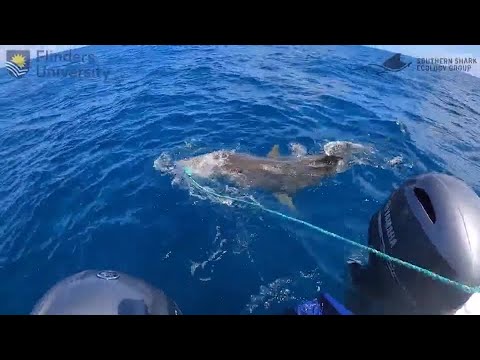

For surfers and divers navigating open ocean waters, sudden encounters with apex marine predators present a terrifying, albeit rare, existential threat. Flinders University researchers in Australia have pioneered high-performance garment technology capable of turning potentially catastrophic shark strikes into survivable medical events.
The primary driver of bite-related mortality isn't force alone, but rather rapid exsanguination caused by severed arterial pathways. Traditional neoprene fails immediately when subjected to serrated teeth, leading to extensive tissue loss and severe laceration. To overcome this critical hazard, Australian scientists integrated ultra-tough ultra-high-molecular-weight polyethylene fibers into custom textile matrices. Laboratory and field trials demonstrated that these resilient composite layers maintain structural integrity even under intense puncture forces, ensuring teeth fail to deeply compromise underlying muscle tissue and major blood vessels. This sharp mitigation of severe puncture depth significantly reduces early blood loss, preserving vital signs long enough for victims to reach emergency trauma centers onshore.
By bridging the gap between textile engineering and emergency medicine, this protective apparel redefines personal safety standards for water sports enthusiasts. Ocean users can now pursue deep-water activities backed by scientific protection that actively safeguards human life.