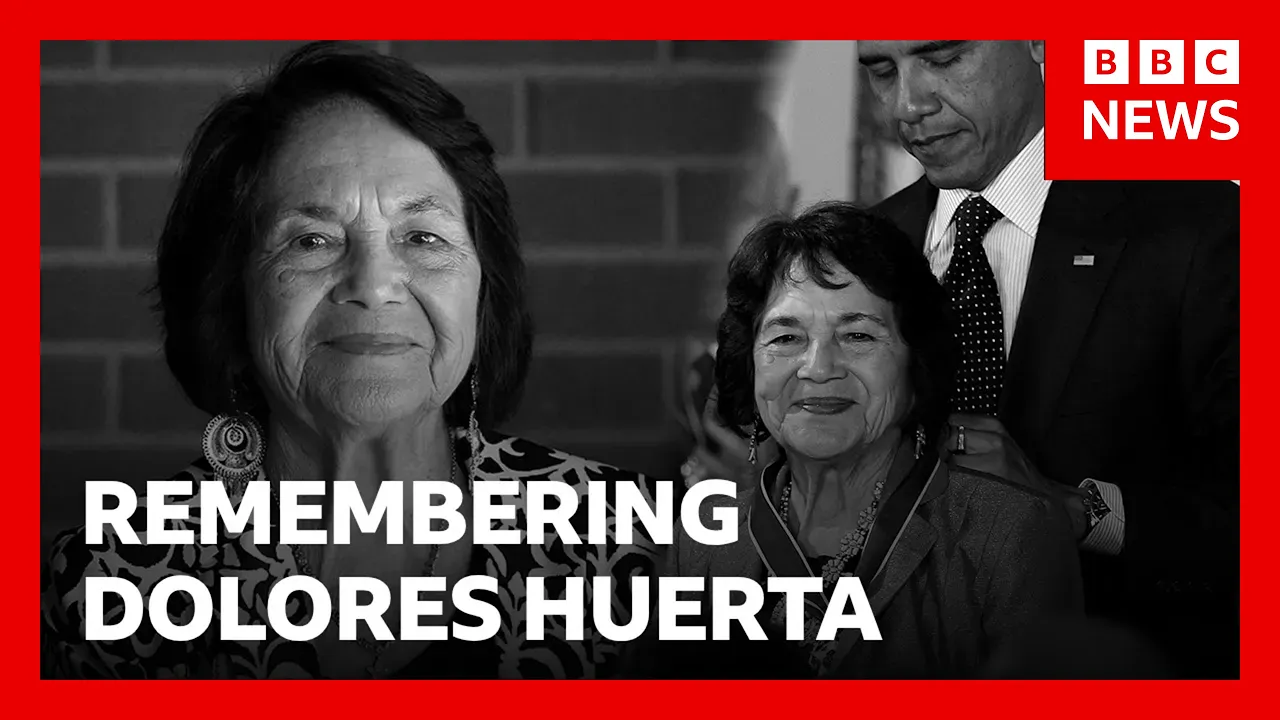

The United States has lost one of its most formidable icons of social justice with the passing of Dolores Huerta at age 96. Her family confirmed the death of the pioneering civil rights figure, whose lifelong activism restructured American labor rights and elevated the voices of agricultural workers nationwide.
If you trace the origins of modern labor protections, you quickly encounter Huerta’s extraordinary footprint. Alongside Cesar Chavez in the 1960s and 1970s, she built a powerful coalition that challenged deep-seated agricultural exploitation. As a co-founder of the United Farm Workers Union, she was instrumental in securing historic collective bargaining agreements for field laborers who had long been disenfranchised by lawmakers and corporate growers. Huerta refused to accept the systemic mistreatment of marginalized rural workers, orchestrating non-violent strikes and consumer boycotts that forced industry executives to negotiate. She served as a fierce champion for women and immigrant communities, proving that grassroots organizing could shift the economic trajectory of an entire industry. During her decades-long tenure in public life, she expanded her scope beyond field labor to tackle broader democratic hurdles, launching her own foundation to defend voting access and immigrant rights. Her unwavering resilience in the face of political resistance earned her national reverence, culminating in 2012 when President Barack Obama bestowed upon her the Presidential Medal of Freedom, highlighting her monumental role in shaping American civic history.
Huerta’s life offers a compelling blueprint for modern civic engagement. Her achievements remain woven into the fabric of working-class protections across the country today.